
Tihar, also known as Deepawali or Yamapanchak, is one of the most cherished festivals celebrated in Nepal. Known as the Festival of Lights, Tihar brings homes and communities together through colourful decorations, traditional rituals, music, delicious food, and family gatherings. Celebrated over five days in the month of Kartik, Tihar holds deep cultural and religious significance. Unlike many other festivals, each day of Tihar is dedicated to worshipping a different animal, goddess, or celebrating an important relationship. From feeding crows and worshipping dogs to lighting oil lamps and celebrating the bond between brothers and sisters, every tradition carries a special meaning.
Let's explore the five days of Tihar and discover the traditions that make this festival so special in Nepal.
1. Kaag Tihar: Honouring the Crow
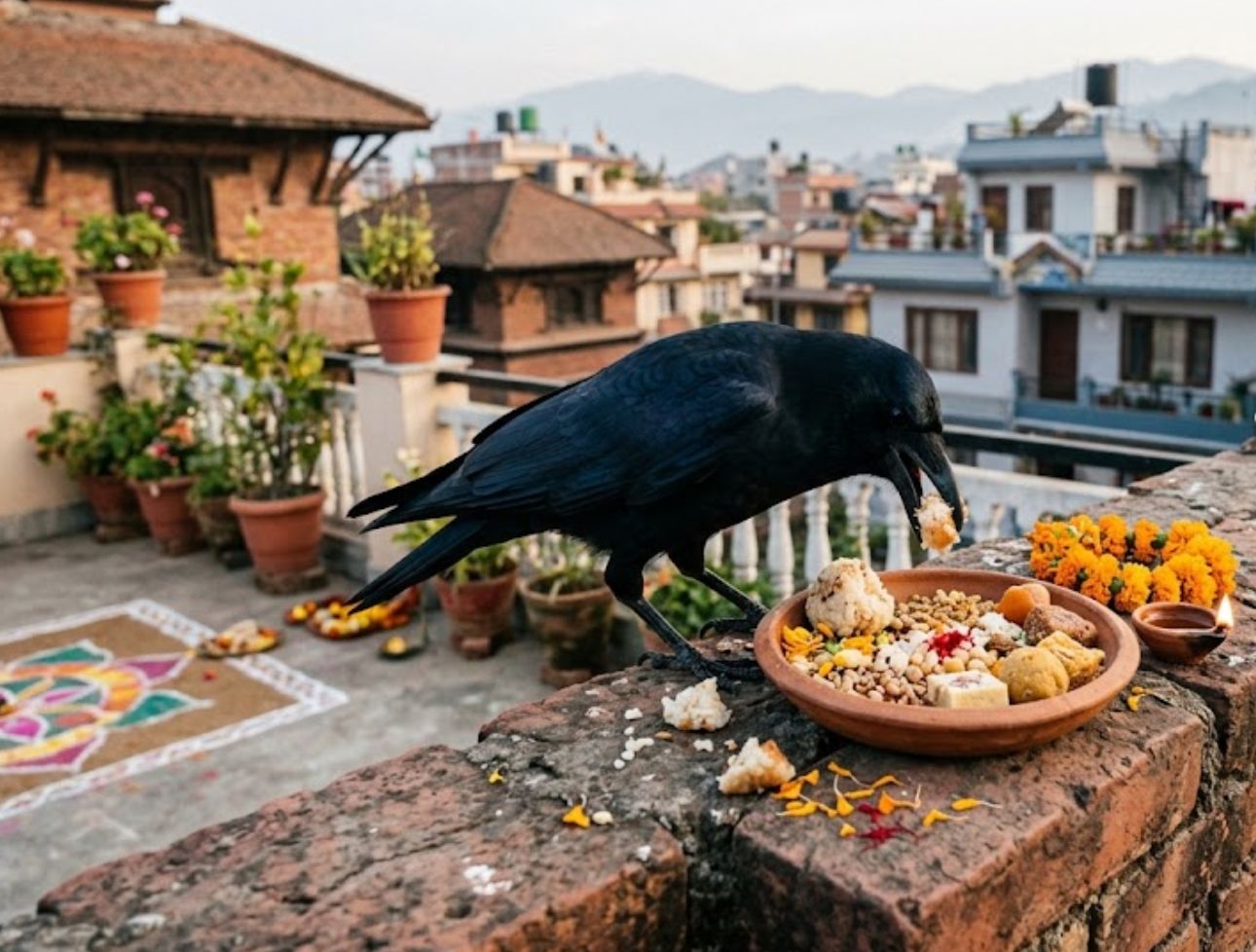
Kaag Tihar marks the first day of the five-day celebration. On this day, people worship crows, which are traditionally believed to be messengers of Yama, the God of Death. Early in the morning, families prepare food offerings, including rice, sweets, and other delicacies, and place them on rooftops or in open spaces for crows. This ritual is performed to honour these birds and seek protection from sorrow and misfortune.
In Nepali culture, crows are also associated with communication and the delivery of messages. Feeding them reflects the importance of respecting all living beings and maintaining harmony with nature. Kaag Tihar begins the festival with a message of gratitude, respect, and compassion towards the natural world.
2. Kukur Tihar: Celebrating the Loyalty of Dogs
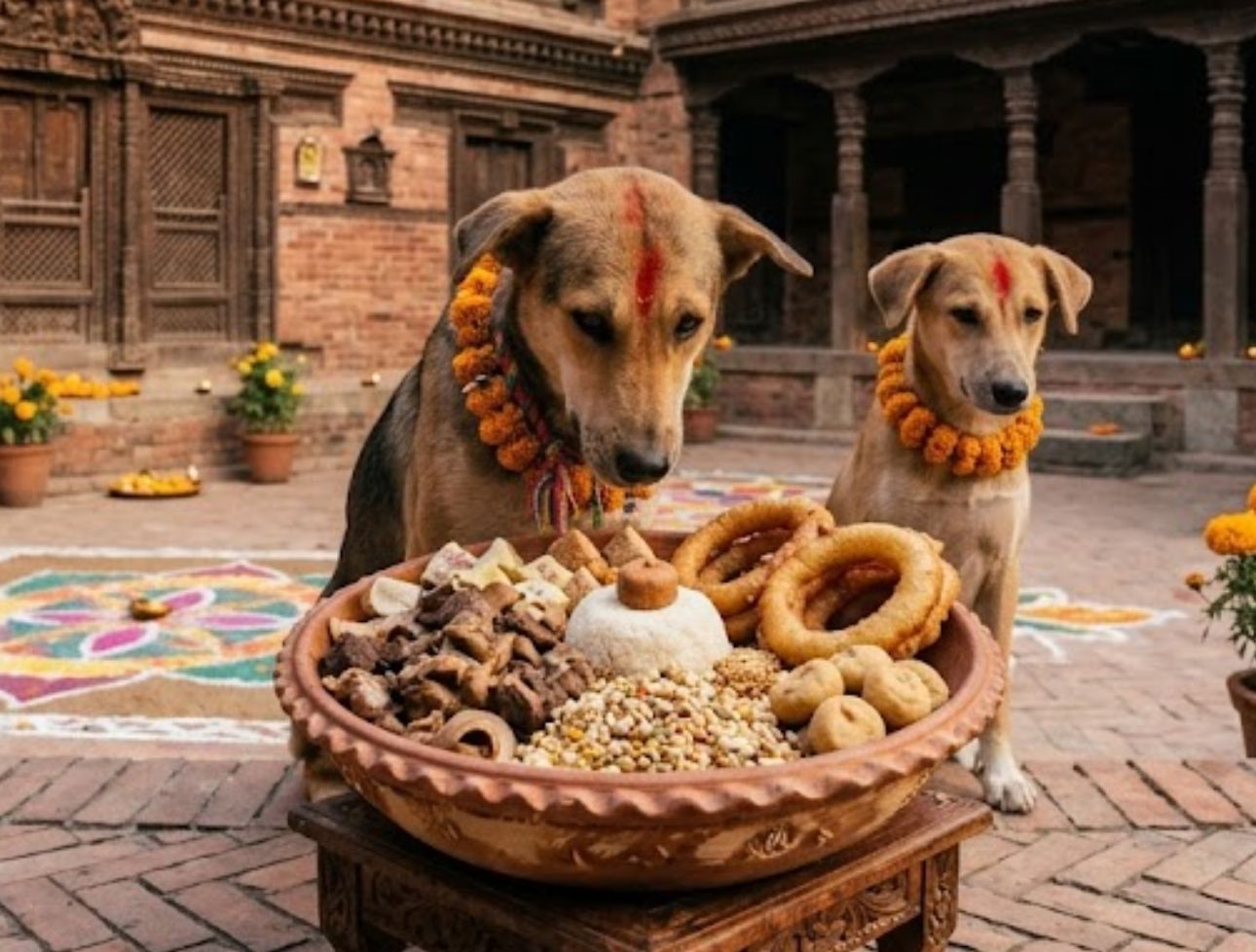
The second day of Tihar is celebrated as Kukur Tihar, a day dedicated to honouring dogs for their loyalty, companionship, and protective nature. Dogs hold an important place in Nepali and Hindu traditions. They are believed to be associated with Yama and are also regarded as guardians and faithful companions of humans. On this day, people decorate dogs with marigold garlands, apply tika to their foreheads, and offer them delicious food. Both pet dogs and street dogs are recognised and celebrated as part of this tradition. Kukur Tihar reminds everyone to appreciate the unconditional love and loyalty animals offer. It also encourages kindness and compassion towards animals, regardless of whether they have a home or an owner.
3. Gai Tihar and Laxmi Puja: Welcoming Prosperity and Good Fortune
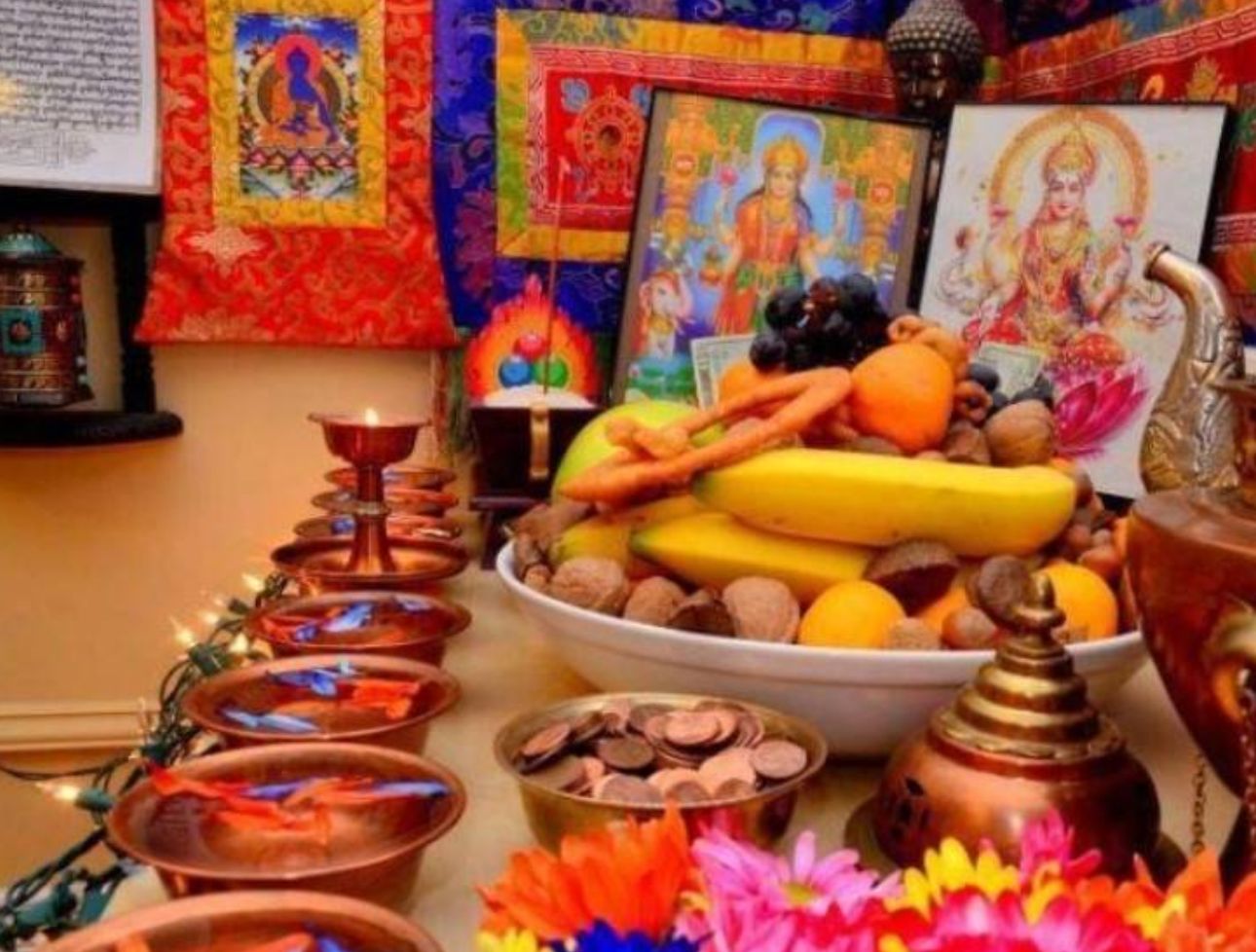
The third day of Tihar is among the most significant days of the festival. It is traditionally associated with Gai Tihar and Laxmi Puja.
Gai Tihar
In the morning, cows are worshipped and offered food, tika, and marigold garlands. In Hindu tradition, cows are considered sacred and symbolise motherhood, nourishment, and prosperity. The cow is also associated with Goddess Laxmi, making its worship an important part of the day's celebrations.
Laxmi Puja
In the evening, families worship Goddess Laxmi, the goddess of wealth, prosperity, and good fortune. Before performing the puja, people thoroughly clean and decorate their homes, offices, and shops. Colourful rangoli designs are created at entrances using coloured powders, flowers, and other decorative materials. These designs, along with small footprints, symbolically welcome Goddess Laxmi into homes.
As night falls, neighbourhoods come alive with traditional oil lamps called diyos, candles, and colourful electric lights. Families perform Laxmi Puja, offer prayers, and share traditional Tihar delicacies such as sel roti, sweets, fruits, and homemade dishes.
Bhailo, traditionally performed by groups of women and girls, is another highlight of Laxmi Puja. They visit neighbourhoods singing traditional Bhailo songs and performing dances. In return, households welcome them with money, fruits, sweets, and other offerings.
Laxmi Puja represents the hope for prosperity, happiness, success, and new beginnings, while Bhailo adds music, joy, and community spirit to the celebration.
4. Goru Tihar, Govardhan Puja and Mha Puja: Respecting Nature and Celebrating Life
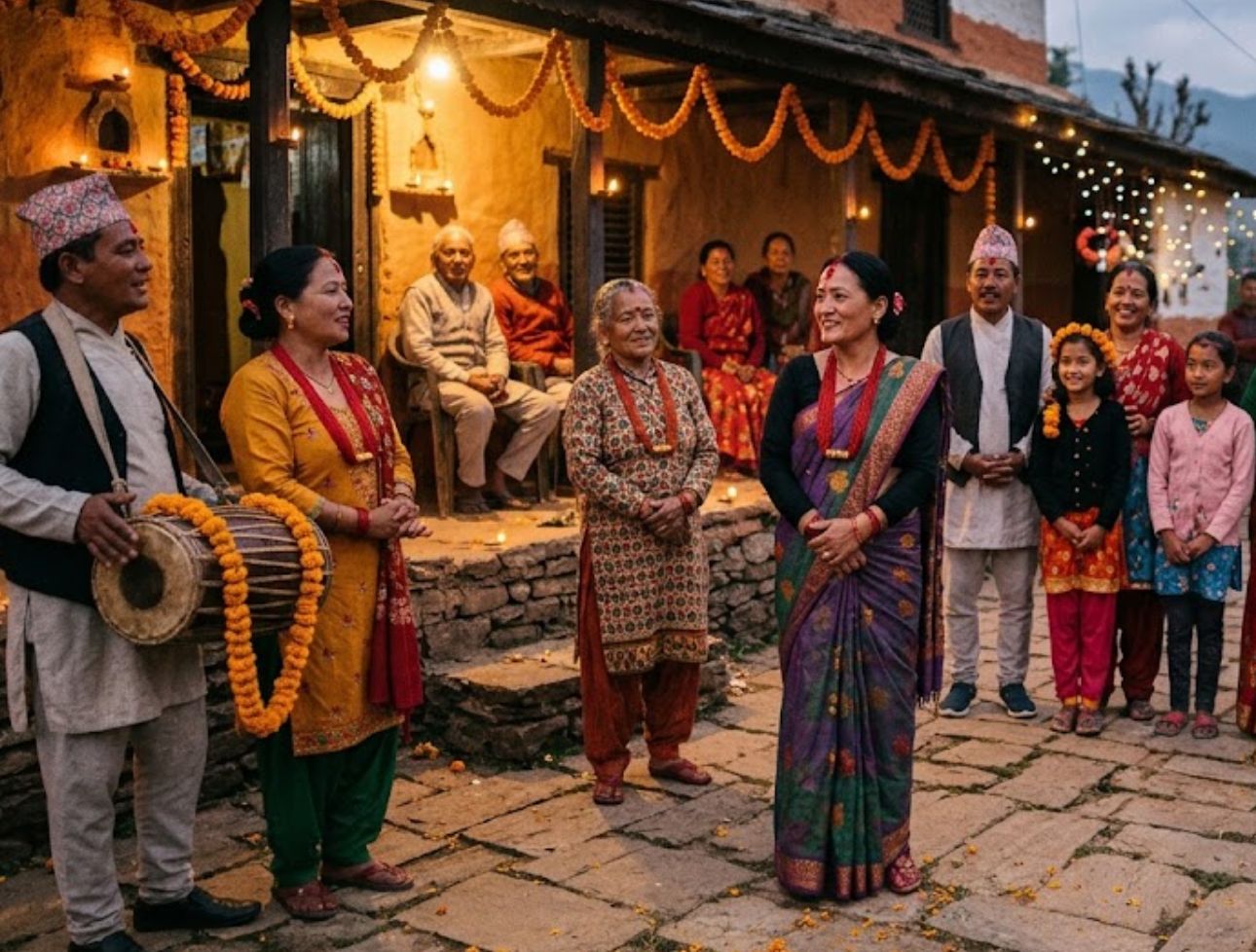
The fourth day of Tihar carries different cultural meanings across Nepal. It is commonly associated with Goru Tihar and Govardhan Puja, while the Newar community celebrates Mha Puja.
Goru Tihar and Govardhan Puja
Goru Tihar is dedicated to worshipping oxen, which have traditionally played an essential role in Nepal's agricultural activities. Farmers decorate oxen with garlands, apply tika, and offer them special food as a gesture of gratitude for their contribution to farming and daily life. Govardhan Puja is also observed on this day, with the worship of Govardhan Mountain, symbolising the importance of nature and the resources that sustain human life.
Deusi: Keeping Traditional Music and Culture Alive
Deusi is one of the most popular traditions associated with Goru Tihar. Groups of boys and men, as well as mixed-age community groups, visit neighbourhoods singing traditional Deusi songs and performing cultural dances. Households welcome the performers with money, sel roti, fruits, sweets, and other traditional foods. The collected offerings are often shared among the group. Deusi brings neighbours and communities together while keeping Nepal's traditional music and festive culture alive.
Mha Puja: Celebrating the Self
The Newar community celebrates Mha Puja, which means worshipping oneself. It is an important cultural tradition that symbolises self-respect, purification, good health, and spiritual well-being. During Mha Puja, family members sit together and perform rituals involving mandalas, flowers, food, and other offerings. Each individual is worshipped as a way of recognising the importance of their own life and well-being. Mha Puja also marks the beginning of the Nepal Sambat New Year, making the day especially meaningful for the Newar community. Together, these celebrations highlight gratitude towards nature, respect for life, and the importance of cultural traditions.
5. Bhai Tika: Celebrating the Bond Between Brothers and Sisters
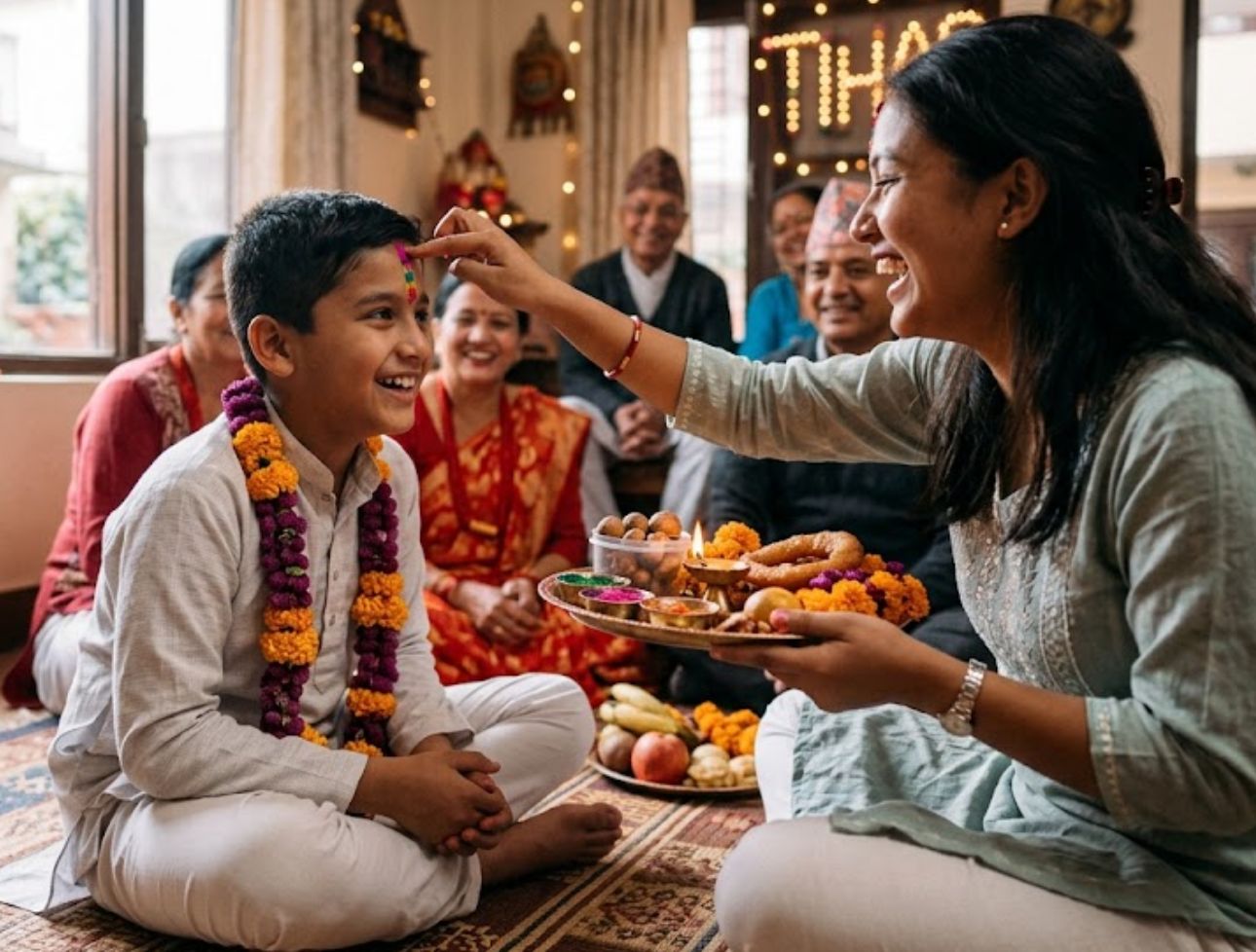
Bhai Tika marks the final and one of the most emotional days of Tihar. It celebrates the special relationship between brothers and sisters. On this day, sisters invite their brothers home and perform rituals by applying colourful seven-coloured tika, known as Saptarangi Tika, on their foreheads. They also offer garlands, sweets, fruits, and traditional dishes while praying for their brothers' long lives, happiness, health, and prosperity. Brothers, in return, offer gifts and blessings to their sisters as a symbol of love, appreciation, and mutual respect.
The tradition is associated with the story of Yamuna and her brother Yama. According to popular belief, Yamuna performed a special ritual for her brother, strengthening their bond and inspiring the tradition of Bhai Tika. For many Nepali families, Bhai Tika is an opportunity to reunite with loved ones, exchange blessings, share meals, and create lasting memories.
Why Tihar Is So Special in Nepal
Tihar is more than a festival of lights and decorations. It represents gratitude, compassion, prosperity, family relationships, and respect for all living beings. Each day carries a different message. Kaag Tihar teaches respect for nature, Kukur Tihar celebrates loyalty, Gai Tihar and Laxmi Puja welcome prosperity, the fourth day highlights gratitude and self-respect, and Bhai Tika celebrates the bond between siblings. The festival also brings people closer to their cultural roots. Whether celebrated in busy cities, small towns, or rural villages, Tihar creates a shared sense of happiness and belonging. For many Nepalis living away from their hometowns, Tihar is also a special opportunity to return home, meet family members, and celebrate together.
Travel Home This Tihar with BusSewa
Festivals become even more meaningful when celebrated with the people who matter most. Whether you are travelling to your hometown for Bhai Tika, visiting relatives, or planning a festive getaway, making travel arrangements in advance can help you enjoy a comfortable journey. With BusSewa, you can explore available bus routes, compare travel options, and book your bus tickets online from the convenience of your home.
This Tihar, make your journey easier and spend more time creating beautiful memories with your loved ones. Celebrate the Festival of Lights with your family. Travel home with BusSewa!